2026-10-24
Brand: CHINENG — Guangdong Jiushang Electronic Technology Co., Ltd., founded 2014
Last updated: October 24, 2026
Source of specs: Food machinery · Brush cleaning and peeling machine
It is 10:40 a.m. in a canteen prep room. Lunch service starts in under two hours. Two cooks are still standing over crates of potatoes with hand peelers—skins on the floor, wrists aching, and the fry station already asking when the next batch will arrive. The wash sink is free. The cutter is idle. The line is not waiting on recipes. It is waiting on peel time.
That bottleneck is why kitchens add a brush peeler: not because “automation sounds modern,” but because hand peeling steals the hour you need for cooking and plating. Below is what that morning looks like before and after a peeler lands on the prep table—and how CHINENG’s published kg/h ladder maps to real batches.
Hand peeling looks cheap until you count people. One cook peeling for a busy lunch can burn 45–90 minutes on potatoes alone—before anyone washes, cuts, or blanches. When volume jumps (banquet day, student canteen peak, hotel brunch), you either add overtime or ship under-peeled product that cooks unevenly.
Common workarounds fail quietly:
Peeling the night before → oxidation, fridge space, food-safety arguments
Buying pre-peeled → cost spike and supply risk
Rushing with dull knives → more waste and injuries
A brush peeler does not invent a new menu. It moves peel work off the critical path so wash → cut → cook can start on time.
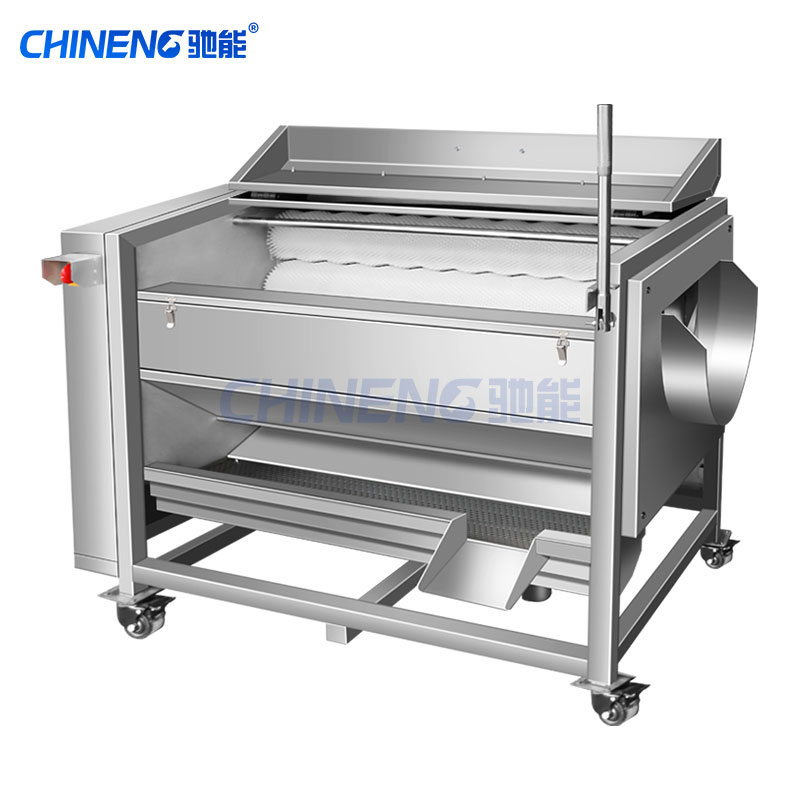
Think in three stations, not one magic machine:
Wash / soil removal — many kitchens already use bubble or ozone washers; see the ozone bubble washing machine guide if that is still the bottleneck.
Peel — brush drum removes skin at published kg/h while the cook stages the next crate.
Cut — diced or sliced product goes to a vegetable cutter when shape matters more than peel.
If you buy a cutter first but still peel by hand, the cutter simply waits. Fix peel throughput before you blame the slicer.
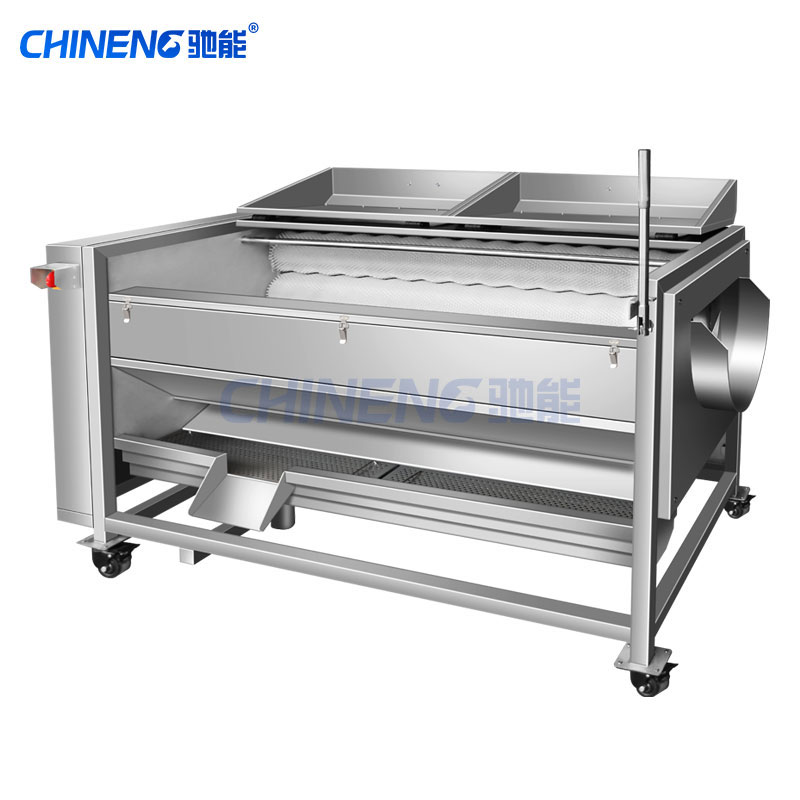
CHINENG lists the line as a brush cleaning and peeling machine on the product page. Catalog starting price is about $2,104 (machine only; shipping, on-site service, and tax extra). Bodies are listed as SUS304 / stainless. All models below are published at 380V—confirm site power before you order a “looks right” bowl size.
Use your busiest hour of peeled potatoes (kg), add a little buffer, then pick a published efficiency band:
| If peak peeled potatoes look like… | Start with (published kg/h) |
| Small restaurant / hotel satellite kitchen | ~300–600 kg/h — e.g. CN-DY-M80-Y, CN-DY-M100-Y, CN-QPJ-B600 |
| Busy canteen / central prep | ~500–1000 kg/h — e.g. CN-HZS-HQ-1507, CN-DY-M150-Y, CN-QPJ-B1000/B1500 |
| High-volume continuous peel | ~1000–1500 kg/h — e.g. CN-DY-M180-Y |
Worked scene: A school canteen needs ~450 kg peeled potatoes before 11:30. With buffer → aim near 500–600 kg/h so one operator can finish with time left to stage the cutter. That points at mid ladder models (M100-Y / B600–B1000 class), not the largest floor unit “just in case.”
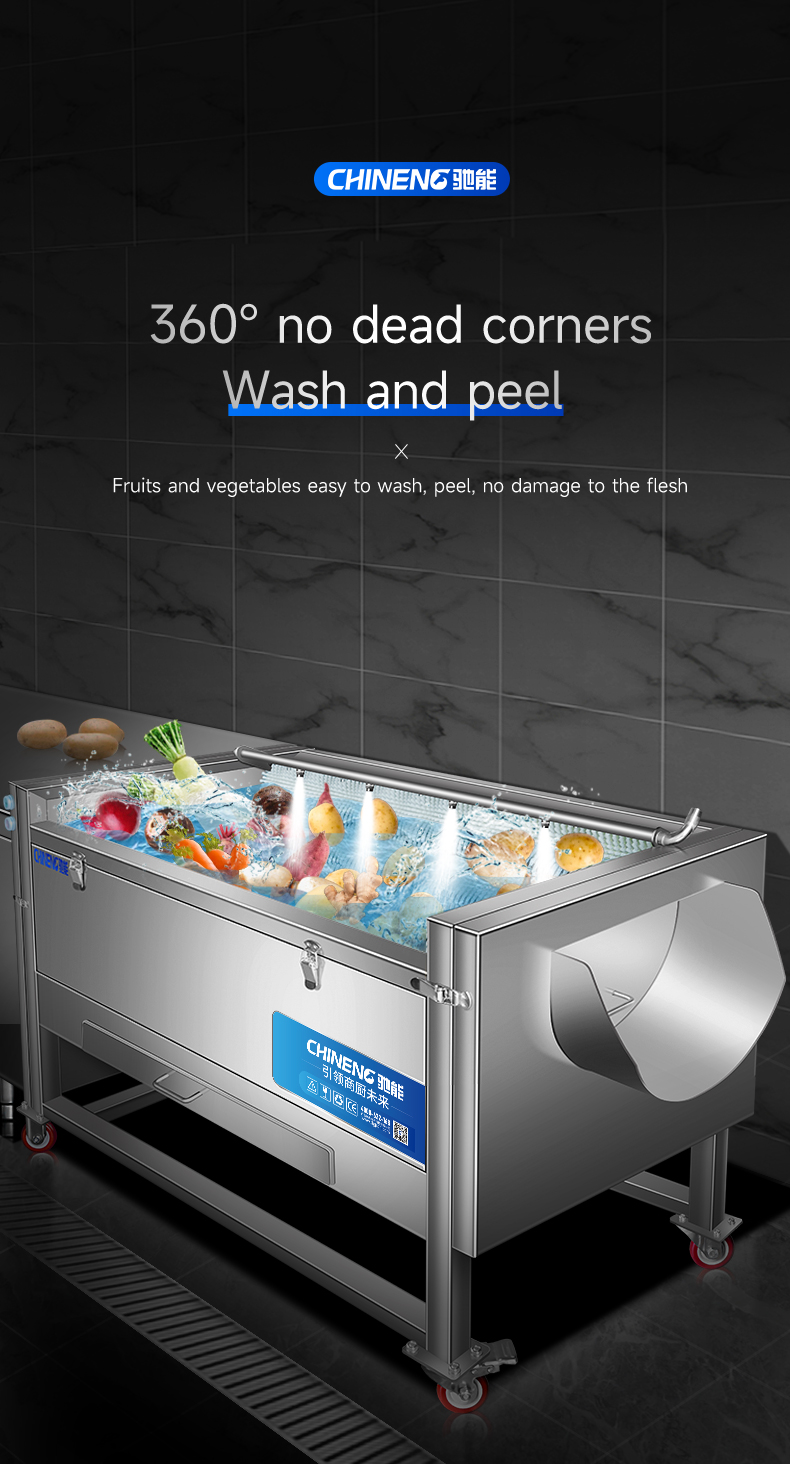
Selected ladder (full sheet on the product page; confirm dimensions on quote—one catalog height print looks atypical):
CN-HZS-HQ-1107 — 400 kg/h, 1.5 kW, 380V, 1300×700×1000 mm
CN-HZS-HQ-1507 — 600–1000 kg/h, 1.5 kW, 380V, 1700×700×1000 mm
CN-DY-M80-Y / M100-Y — 300–500 / 400–600 kg/h, 1.1 kW, 380V
CN-DY-M150-Y / M180-Y — 800–1000 / 1000–1500 kg/h, 1.5 kW, 380V
CN-QPJ-8076-MS-B600 / B1000 / B1500 — 300–500 / 500–800 / 750–1000 kg/h, 1.1–1.5 kW, 380V
CN-DY-DX80-1 / DX80-2 — listed in pieces/h (60–100 / 120–200), different job profile—ask on quote if your product is piece-count, not bulk kg
Do not buy the tallest kg/h if your peak is 200 kg and your breaker cannot support 380V. Oversized drums waste water, floor space, and changeover time on small batches.
When peel clears before the rush, cooks stop negotiating “who peels next.” Potatoes move wet to the cutter or straight to cook. Managers stop padding labor for a task that does not improve taste.
If you are that 10:40 a.m. canteen: measure tomorrow’s peak potato kg, confirm 380V, then request a CHINENG peeler quote with photos of the prep bay. Pair wash and cut with the ozone washer and vegetable cutter guides when those stations are still the limit.
Contact CHINENG for layout questions—send peak kg/h, potato size mix, and available floor length.
Price transparency
Nationwide coverage
Rapid design
Quick quote
Worry-free after sale
Guangdong Jiushang Electronic Technology Co., Ltd.
+86-400-0622-168
Mobile: +86-135-2862-7820
Contact: Manager Liu
Address: Building 5, Huyue Bay Area, Humen Town, Dongguan City, Guangdong Province, China